
Facial laxity and contours
Skin firmness changes with age and other factors. A professional assessment can distinguish skin laxity from deeper structural changes.
The finer points of facial firmness.
A softer jawline, changes in skin texture or shadows beneath the eyes can alter how your face looks. They do not all have the same cause.
At Nivani Aesthetics Clinic in Malad West, the first step is to understand the concern, your medical history and which options are suitable to discuss, including when specialist assessment is needed.
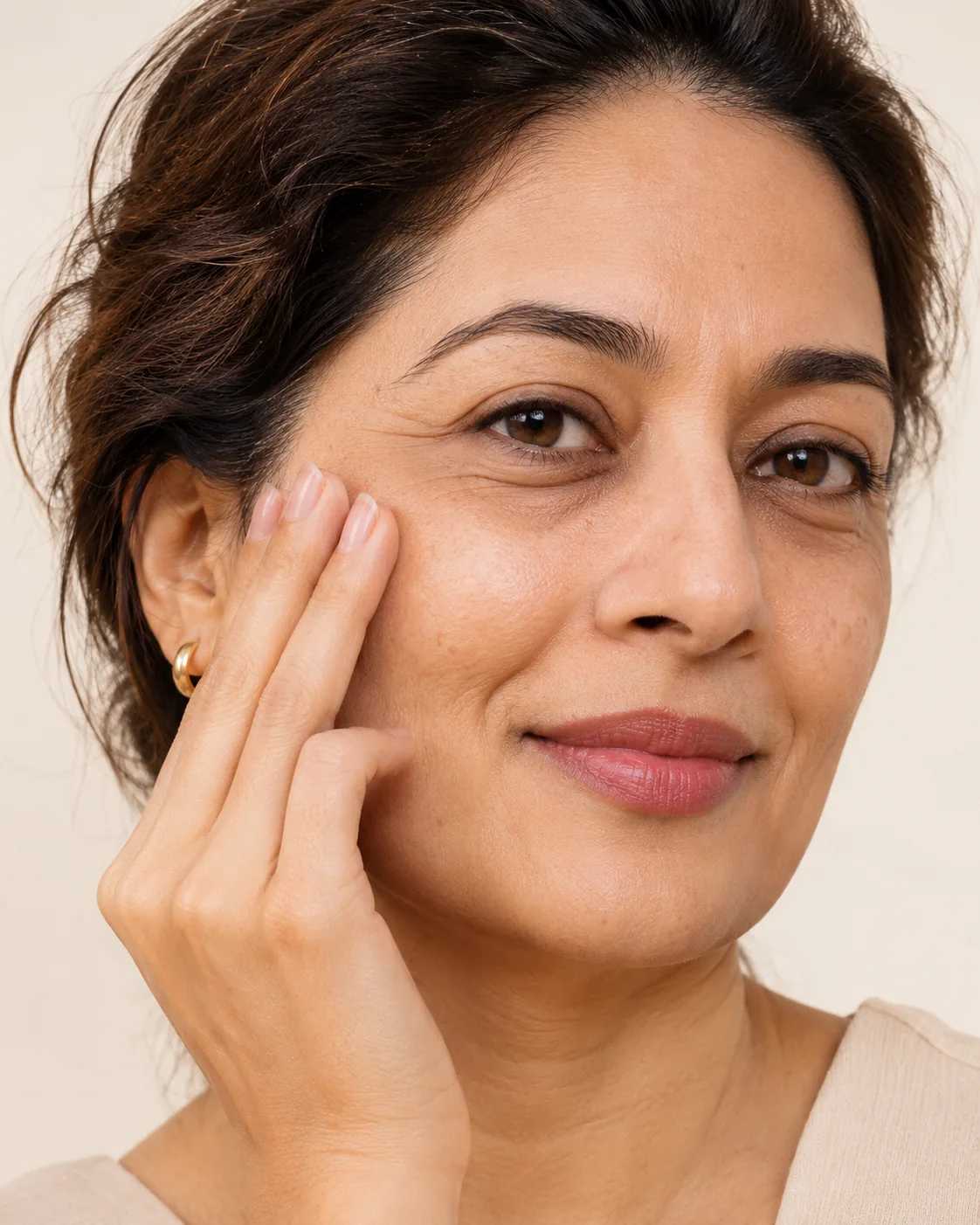
What appears to be tired skin can reflect volume changes, pigmentation, swelling or a change in firmness. Understanding the difference matters before choosing a procedure.
THE USEFUL QUESTION: Where is the change coming from?
Skin firmness changes with age and other factors. A professional assessment can distinguish skin laxity from deeper structural changes.
Loss of volume and facial anatomy can create shadows beneath the eyes, even when the skin itself has little pigmentation.
Darkness may reflect pigmentation, allergies, irritation or fluid-related puffiness. Some concerns need medical evaluation rather than cosmetic treatment.
These are the eight exact options listed by Nivani. Each requires an individual assessment. A catalogue name does not establish that a particular product, device or procedure is suitable or clinically authorised.
A consultation-led option for visible changes in facial firmness. The specific technique and whether it suits your skin must be established before treatment.
Radiofrequency-based skin tightening may be discussed for selected laxity concerns. Device type, energy settings, skin characteristics and operator training affect suitability and risks.
Focused ultrasound is considered for certain facial firmness concerns. The exact device, treatment area and potential for discomfort, burns or nerve-related complications need careful assessment.
An injectable option sometimes discussed for selected under-eye hollows. The delicate area carries serious vascular and vision-related risks, so product authorisation and specialist suitability need particular scrutiny.
A catalogue name for a proposed under-eye option. The actual substance, preparation method, evidence, legal status and treating professional must be confirmed before describing or offering a procedure.
A listed under-eye treatment whose formulation, administration method, evidence and authorisation must be checked. A consultation should establish whether any intervention is appropriate.
A separately listed under-eye option. It should not be treated as interchangeable with PDRN; product composition, indication, route and supporting evidence require verification.
Selected professionally administered peels may be considered for some surface pigmentation concerns. The eye area is sensitive, and formulation, application boundary and pigment-change risk need specialist review.
Delicate anatomy, product differences and the risk of adverse effects matter more than a treatment label. A clinician may recommend that you avoid a procedure or seek specialist care first.
Before RF or HIFU, confirm the device, intended facial areas, settings, contraindications, operator training and possible burns, pigment changes or other complications.
Under-eye injections can cause swelling, irregularity or vascular injury. Rare events include vision loss. Verify legal scope, product approval, emergency protocols and informed consent before proceeding.

Dr. Neha Garg, BDS and cosmetologist, is Nivani’s Clinical Director for Aesthetic Services. This role does not establish independent authority to carry out every energy-based or injectable procedure.
For the under-eye region in particular, a suitably qualified clinician must assess the diagnosis, procedure, product, risks and alternatives. Referral to an appropriately qualified medical specialist may be needed.
Bring a list of current medicines and any earlier facial procedures. The consultation should establish what is changing and why.
Share when it began, whether it is changing and what products or treatments you have tried.
Ask whether skin firmness, volume, pigmentation, puffiness or a medical condition is the main issue.
Discuss alternatives, product or device details, operator qualification, potential adverse effects, recovery and follow-up.
No procedure on this page should be presented as equivalent to surgery. Nonsurgical treatments have different indications and limitations, and visible changes vary.
Radiofrequency and focused ultrasound use different energy approaches. Their suitability depends on the device, target area, skin characteristics and medical assessment.
Pigment, shadows from hollows, allergies, thin skin and other factors may contribute. Identifying the cause matters before discussing a peel or an injectable option.
Yes. Unintended injection into blood vessels can cause tissue damage and, rarely, vision loss or stroke. Product and site authorisation, practitioner qualifications and emergency arrangements must be verified.
No. They are separate entries in Nivani’s catalogue. Their specific compositions, methods and clinical purposes cannot be assumed from the names.
No. Skin laxity, anatomy, medical history and device characteristics influence suitability. The outcome and downtime cannot be promised in advance.
A peel works at the skin surface and does not replace lost volume or correct structural puffiness. The reason for the concern needs assessment first.
New one-sided swelling, sudden visual changes, pain or significant unexplained changes around an eye need prompt medical evaluation.
Discuss skin tightening, hollows, puffiness or pigmentation with Nivani Aesthetics Clinic. The appropriate next step begins with understanding the cause.
Solitaire 2, B Wing, 101 and 102, opposite Infiniti 2 Mall, Malad Linking Road, Malad West, Mumbai 400064.
Call +91 98199 93433 | +91 98199 97833