
Flat marks left after acne
Brown, red or darker patches may remain after inflammation. They often affect skin colour without leaving the surface indented. Some fade with time; persistent pigmentation may need separate care.
The marks acne leaves behind.
Breakouts can settle while the skin still shows dark marks, pitted texture or fresh inflammation. Finding out which of these you are seeing helps shape the next step.
At Nivani Aesthetics Clinic in Malad West, Mumbai, we discuss acne history, scar type and skin sensitivity before considering a treatment or recommending specialist review.
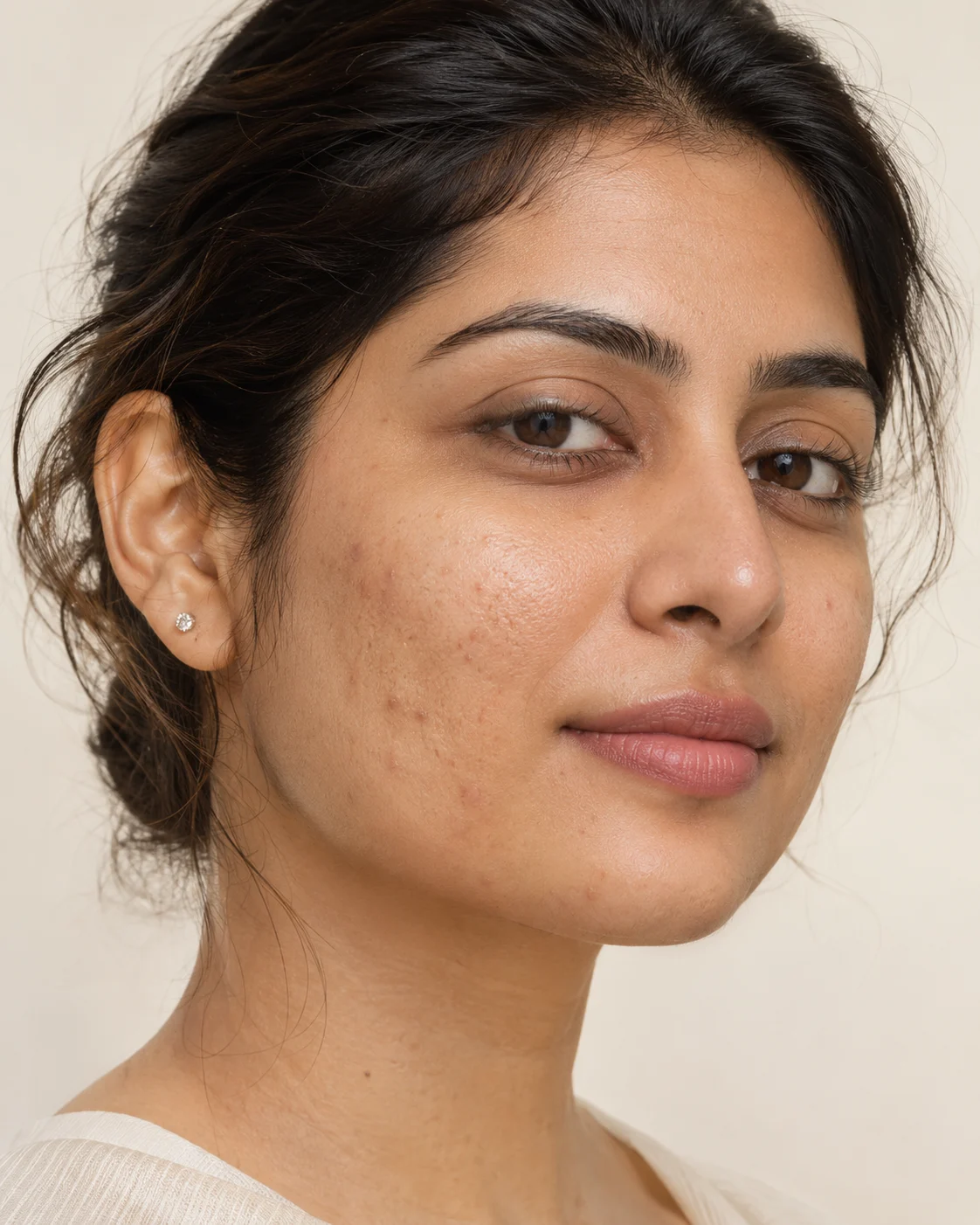
A dark spot and a small pit can appear after the same breakout. Their causes and treatment approaches may be quite different.
The first question: What has actually changed in your skin?
Brown, red or darker patches may remain after inflammation. They often affect skin colour without leaving the surface indented. Some fade with time; persistent pigmentation may need separate care.
Small pits, rolling depressions and box-shaped scars can change skin texture. Scar shape and depth influence the options a trained clinician may discuss.
Ongoing acne can leave new marks and scars. Getting the breakouts under control often comes before procedures intended to improve existing scars.
Acne scars vary in depth and shape. These treatments may be considered after an assessment of your skin, acne history and healing risks.
An individual plan for scars left by acne. The assessment considers scar depth, skin tone, ongoing breakouts and which procedures may be appropriate.
Controlled microneedling is sometimes used to improve the appearance of selected depressed scars. Recovery, infection precautions and more than one session may need discussion.
Microneedling combined with radiofrequency energy may be considered for particular scar and texture concerns. Benefits, device-specific risks and the operator’s training require careful review.
A light-based treatment approach that may be discussed for certain active acne concerns. The intended protocol, products and possible reactions need to be confirmed first.
A professional peel may be considered for selected acne-related concerns. Its formulation, your medication history and the risk of pigmentation changes need review first.
This microneedling option needs a closer look at the exact device and treatment plan. Ask who will perform it, what changes are realistic and what recovery involves.
Mostly noticing flat dark marks? Explore Radiance & Even Tone. For other skin concerns, visit Skin & Facial Aesthetics.
The details matter, especially with darker skin tones, active acne, recent medication use or a history of irritation and slow healing.
If breakouts are still active, a clinician may prioritise acne care. Tell the clinic about current and recent acne medicines and any history of slow healing.
Microneedling, peels and radiofrequency treatments can cause irritation, infection, pigment changes or scarring. Serious injuries have also been reported with some RF microneedling uses. Ask who will perform the procedure and what device is planned.

Dr. Neha Garg, BDS and cosmetologist, is Nivani’s Clinical Director for Aesthetic Services. An appropriately qualified clinician must assess suitability for scar procedures, with dermatologist referral when the diagnosis or complexity calls for it.
A useful consultation explains the scar type, whether acne needs treatment first, possible alternatives, realistic improvement and the risks of the proposed procedure. Scar improvement varies, and complete removal should never be promised.
Photos of earlier breakouts and a list of current medicines can help. Your first visit should clarify what is happening before a procedure is proposed.
Share when acne began, the treatments you have tried, which products or medicines you use and how your skin has reacted to past procedures.
Ask whether your marks are flat pigmentation, indented scars, raised scars or active acne. This can change both the treatment choice and its timing.
Discuss a qualified operator, device or peel details, infection prevention, expected downtime, sun care, follow-up and the limits of improvement.
Flat red or brown marks after a breakout often reflect a colour change in the skin. Acne scars usually alter texture, sometimes leaving pits or raised areas. An assessment can distinguish them.
No treatment can promise complete removal. Selected procedures may improve the appearance of some scars. The degree of improvement depends on scar type, depth, skin characteristics and healing.
It may reduce the appearance of selected depressed scars by encouraging skin repair. More than one session may be needed, and some scars need a different approach.
MNRF adds radiofrequency energy to microneedling. That changes the procedure and its risks. Burns, scarring, fat loss and nerve injury have been reported with some RF microneedling uses.
DP4 Microneedling is one of the options named by Nivani. Ask the treating clinician which device will be used, why it is suitable and what the risks and recovery may be.
These are listed as acne-related treatment options. Whether either suits you depends on the diagnosis and exact protocol. Neither should replace an appropriate acne-care assessment.
Often, yes. Managing ongoing inflammation may reduce the chance of new scars and influences when scar procedures should begin.
Skin tone and a history of post-inflammatory darkening matter. Peels, microneedling and energy-based treatments should be selected with careful attention to pigmentation changes, technique and recovery.
Visit Nivani Aesthetics Clinic to discuss active acne, lasting scars and the possible next steps after a skin assessment.
Solitaire 2, B Wing, 101 and 102, opposite Infiniti 2 Mall, Malad Linking Road, Malad West, Mumbai 400064.
Call +91 98199 93433 | +91 98199 97833