An IV is a medical procedure
Insertion of a cannula and delivery of a formulation require infection prevention, appropriate personnel and monitoring.
What belongs in an IV drip, and why?
An IV infusion places a formulation directly into the bloodstream. That makes the ingredients, clinical reason and possible reactions important to understand before treatment. Familiar labels such as “glow” or “anti-ageing” do not establish that an infusion will improve skin appearance.
These six names are Nivani’s current catalogue entries. Discuss whether an IV is appropriate at all, and ask about the exact formulation rather than relying on the treatment name.
The individual concern and medical context matter more than a label in a catalogue.
Insertion of a cannula and delivery of a formulation require infection prevention, appropriate personnel and monitoring.
Claims about brighter skin, faster ageing reversal or detoxification require stronger evidence than a promotional treatment label.
Kidney issues, allergies, existing medicines, previous infusion reactions and other factors can affect whether an infusion is appropriate.
Nivani lists these six IV options. Specific doses, mixtures, efficacy and regulatory authorisation are not established by the catalogue name alone.
An IV vitamin C product requires an established clinical reason, formulation and a review of relevant medical conditions and risks.
The name does not identify its ingredients or demonstrate cosmetic benefit. Obtain the exact product record before considering infusion.
The phrase describes a marketed category, not an established anti-ageing outcome. Ingredient and evidence review is essential.
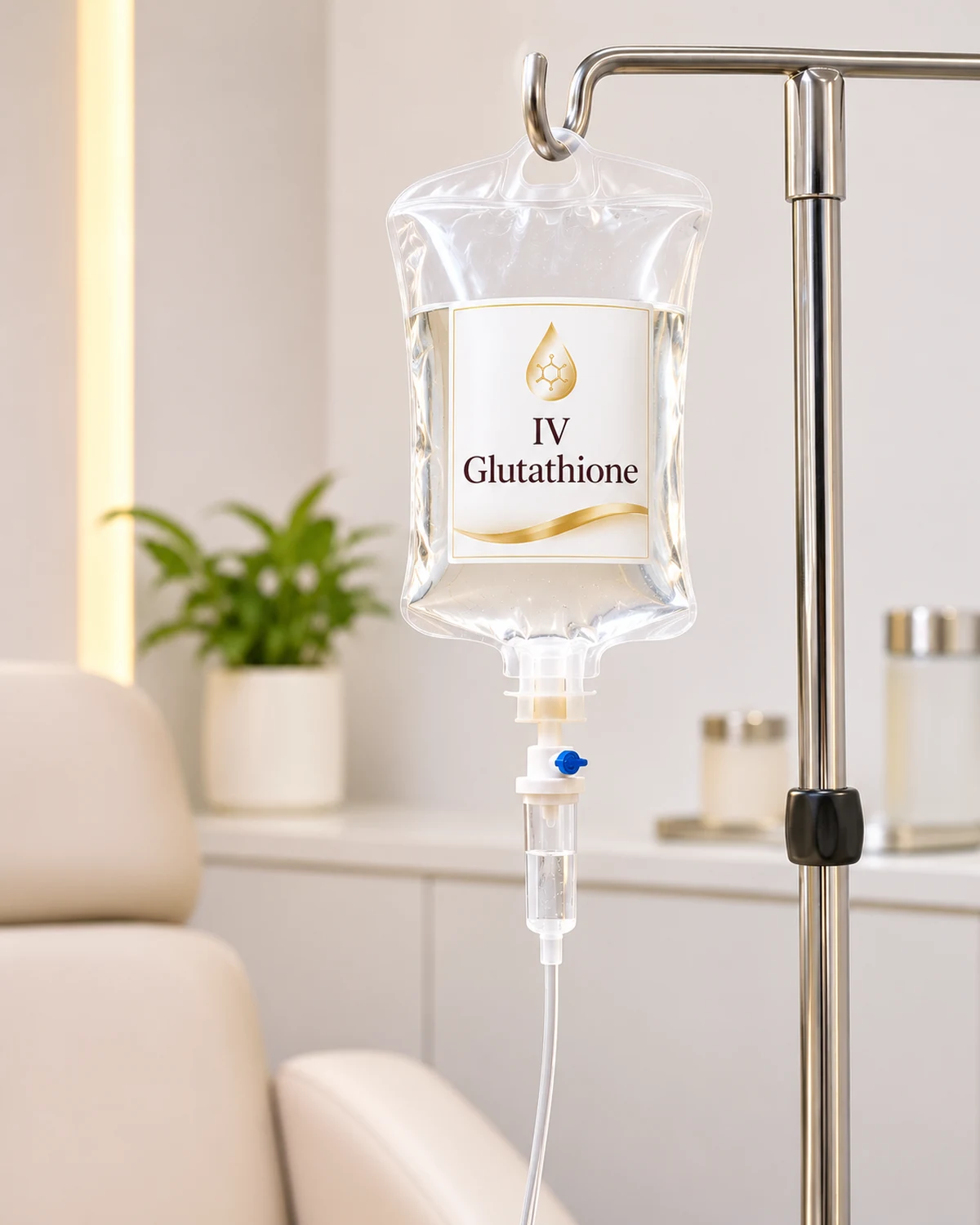
The brochure specifies a 600 mg glutathione entry. The dose alone does not establish an approved skin-lightening indication.
The catalogue separately lists a 1200 mg glutathione entry. Higher amounts should not be assumed to provide better cosmetic results.
This is a distinct 1800 mg listing. A clinical review must establish formulation, indication and suitability, with no dose-response promise.
Catalogue names do not guarantee suitability, actual protocols or outcomes.
A clinical review should consider expected benefits, complications and alternatives.
Review ingredient list, concentration, source, clinical purpose and whether a non-IV approach could be appropriate.
Infection, vein irritation, allergic reactions, fluid-related issues and contamination are possible. Injectable-grade quality and emergency procedures matter.

Dr. Neha Garg, BDS and cosmetologist, is Nivani’s Clinical Director, Aesthetic Services. A suitably qualified treating professional must assess and perform each procedure, with specialist referral where appropriate. The exact device or infusion formula, operator and risks should be explained before treatment.
No. A catalogue title cannot guarantee a cosmetic result, and evidence for cosmetic wellness infusions is limited.
The catalogue specifies three amounts: 600 mg, 1200 mg and 1800 mg. It does not prove that one gives a better cosmetic result.
No. The formulation and your medical history should be reviewed, including relevant kidney and metabolic concerns.
The catalogue does not specify the formula. The actual ingredients should be provided and assessed before treatment.
There is no basis to promise reversal of ageing from an IV wellness label.
The delivery route differs. Direct bloodstream delivery does not automatically make an infusion necessary or better for routine wellness.
Ask about infection prevention, allergies, product sourcing, fluid-related risks, trained supervision and management of reactions.
A clinical suitability review is important before infusion, including the indication and formulation.
Nivani Aesthetics Clinic | Solitaire 2, B Wing, 101 and 102, opposite Infiniti 2 Mall, Malad Linking Road, Malad West, Mumbai, Maharashtra 400064.