Shedding that began suddenly
Stress, illness, medication changes and nutritional factors can sometimes contribute to increased shedding. Some cases improve when the underlying trigger settles.
Understand the pattern before choosing a treatment.
Hair thinning can show up as a wider parting, a receding hairline or more shedding after a wash. Those changes may look alike but have different causes. A careful history and scalp assessment can help identify which options deserve consideration.
At Nivani Aesthetics Clinic in Malad West, discuss changes in your hair and scalp, previous treatments and the limits of each proposed procedure.
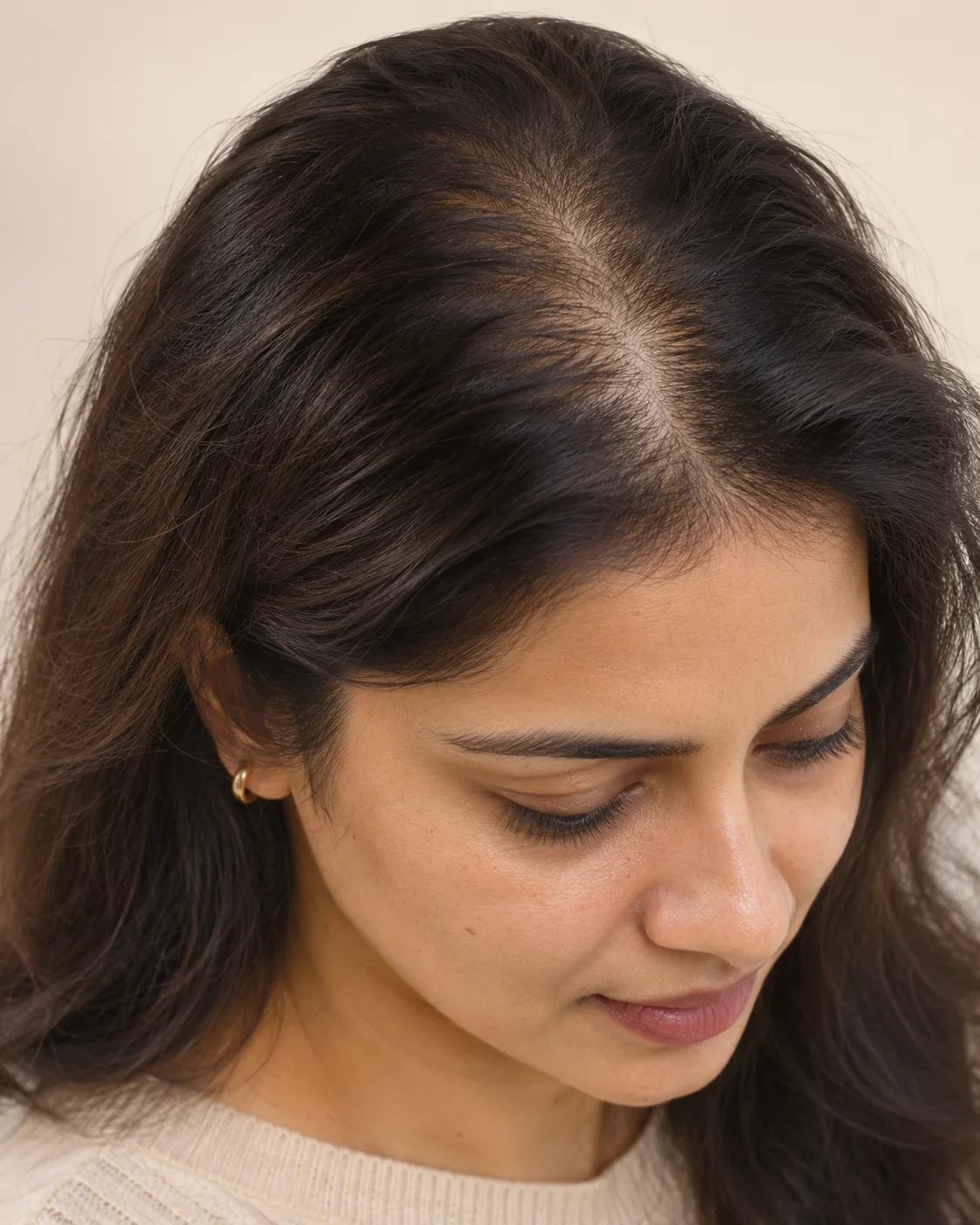
Stress, illness, medication changes and nutritional factors can sometimes contribute to increased shedding. Some cases improve when the underlying trigger settles.
Progressive loss may have a hereditary or hormonal component. Early assessment helps clarify whether ongoing care could be useful.
Redness, scaling, pain or patchy loss can signal a medical scalp condition. Specialist diagnosis may be needed before a cosmetic treatment is discussed.
The names below come from the approved clinic catalogue. The diagnosis, product identity and professional assessment determine whether an option is appropriate.
Platelet-rich plasma uses a preparation derived from the patient’s blood. It may be discussed for selected patterns of hair loss after diagnosis, with realistic expectations and explanation of injection-related risks.
A source-listed growth-factor concentrate treatment. The exact preparation process, clinical indication and available evidence should be explained before deciding whether it belongs in a hair-care plan.
Low-level light devices have been studied for certain hair-loss patterns. Suitability, device details and the need for repeated use should be reviewed with a qualified clinician.
A catalogue-listed option. Product composition, route of use, regulatory status and evidence for hair growth must be established before making a treatment-specific recommendation.
A scalp treatment label that can refer to different injected substances. Nivani should explain the actual formulation, the evidence for the proposed indication and possible injection reactions.
This is the clinic’s exact catalogue wording. Collection, processing, product classification, regulatory authorisation and practical availability require procedure-specific confirmation.
A distinct catalogue entry whose manufacturing process, quality controls, regulatory position and human clinical evidence need clear documentation before specific claims are made.
A listed named option. The DP4 device, exosome preparation, technique and intended indication must not be inferred from its name.
Treatment suitability is decided after assessment. Listed options do not imply a guaranteed result or an approved device, formulation or prescription for every patient.
Scarring hair loss, patchy hair loss and persistent scalp inflammation may require specialist assessment. A cosmetic procedure should not delay diagnosis.
Exosome products are not interchangeable. A catalogue name alone does not establish authorised composition, validated efficacy or a suitable route of administration.
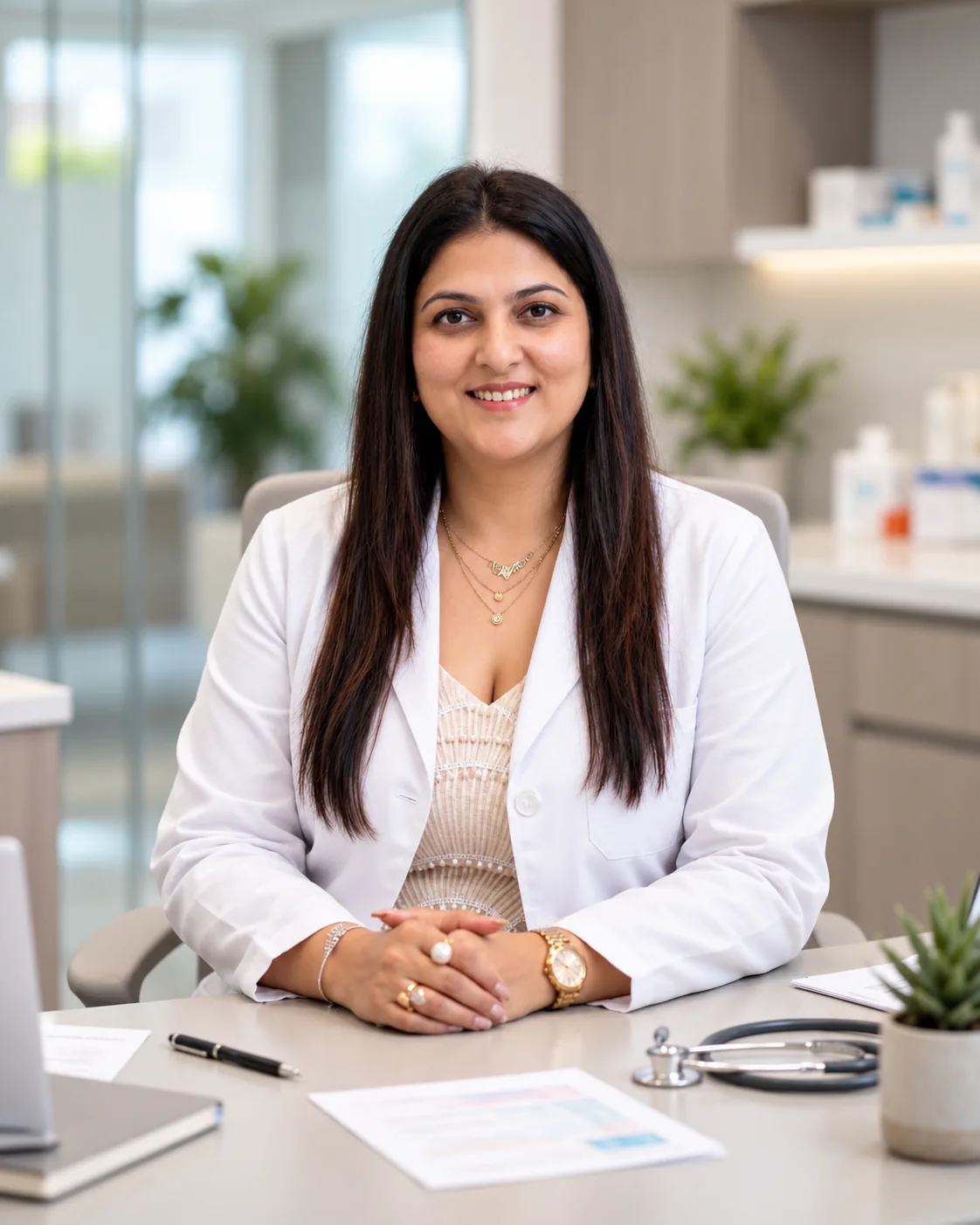
Dr. Neha Garg is Nivani’s Clinical Director, Aesthetic Services (BDS and cosmetologist). Hair-loss diagnosis and procedural suitability should be assessed within the responsible clinician’s authorised scope, with dermatologist referral where indicated.
Share photographs, medication history, family history, recent illness and when you first noticed shedding.
Discuss whether the pattern suggests temporary shedding, progressive thinning or a scalp condition requiring referral.
Review the expected level of evidence, device or product identity, possible risks, follow-up and alternatives.
No. Some temporary shedding improves, while other patterns need ongoing treatment or specialist care. Complete regrowth cannot be promised.
No. Suitability depends on the type of hair loss, medical history, blood-related conditions and a qualified assessment.
They are separate entries in Nivani’s catalogue. The preparation and intended use must be explained using the actual products and protocols.
No immediate regrowth should be expected. Research suggests possible benefit in selected cases, generally over a period of continued use.
Regulatory status depends on the exact product and jurisdiction. The FDA says there are no FDA-approved exosome products in the United States; Indian authorisation needs independent product-level verification.
The name alone is not enough to establish the device, ingredients or technique. Ask for the exact method and risk information.
A clinician may consider investigations if symptoms suggest nutritional, hormonal or other medical causes. Tests are based on the assessment.
Patchy loss, scarring, scalp pain, significant inflammation or unclear diagnosis can warrant specialist evaluation.
Nivani Aesthetics Clinic, Solitaire 2, B Wing, 101 and 102, opposite Infiniti 2 Mall, Malad Linking Road, Malad West, Mumbai 400064.